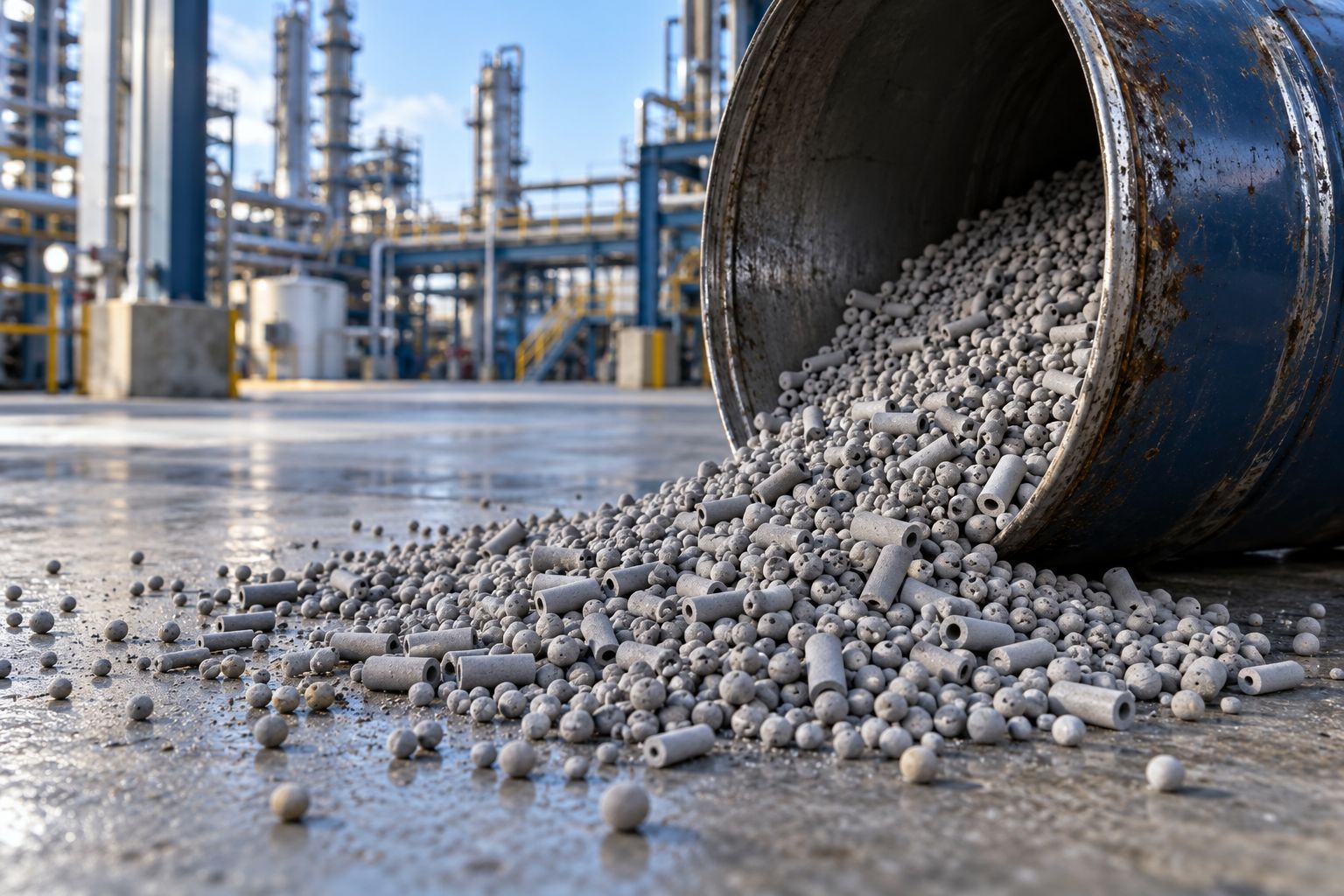
Catalytic reforming units in refineries use catalysts made of platinum, often combined with rhenium, on an alumina support. When the catalyst is replaced, the precious metal is still there. Spent reforming catalyst is therefore sent for recovery, and its value depends on how much metal a lot holds and how easily it can be processed.
What decides the value
- Platinum and rhenium content. This is measured by assay on representative samples and is the main driver of value.
- Weight of the lot. The metal content is applied to the dry weight, so the moisture in the material matters.
- Carbon and other residues. Coke, sulfur and hydrocarbons from service can add processing steps.
- Fines and foreign material. Broken catalyst, ceramic balls and other support material change the weight and the handling.
Why sampling matters
A drum of catalyst can vary from top to bottom, and a lot can vary from drum to drum. Value is agreed on samples that represent the whole lot, so the sampling method is usually agreed before any material moves. Keeping drums labelled and in the same order they came out of the unit helps.
Other catalysts with precious metals
Isomerization and dehydrogenation catalysts can also contain platinum or palladium. Chemical and pharmaceutical catalysts such as Pd/C and Pt/C are a separate group, with their own sampling and processing.
Preparing to sell spent catalyst
- Note the unit the catalyst came from and the original catalyst type, if known.
- Count the drums or bags and note the approximate weight.
- Keep any analysis reports from the refinery.
- Take photos of the drums, labels and a sample of the material.