
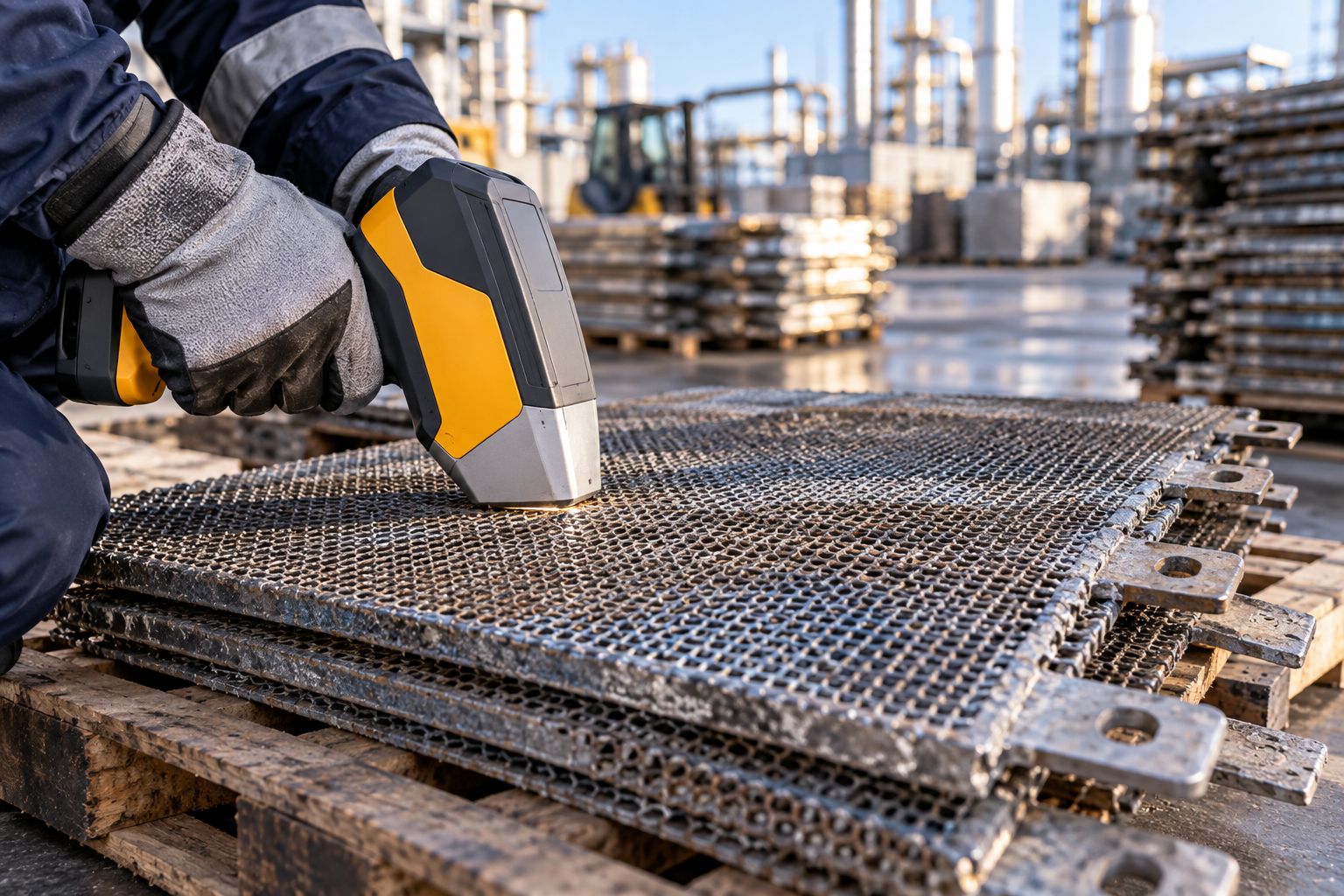
Most first conversations about industrial scrap happen on WhatsApp or by email. Clear photos let a buyer identify the material, judge its condition and decide whether an on-site inspection or a sample is the next step. A few minutes spent on photos can save days of back and forth.
The five photos every buyer wants
- The whole lot. One wide shot that shows everything together, with the pallets, drums or bags it sits in.
- Close-ups of the material. Two or three sharp photos of the surface, coating, electrode tips or broken face, taken in good light.
- Labels and markings. Nameplates, part numbers, drum labels and stamped codes often identify the material faster than anything else.
- A size reference. Put a tape measure, a pen or a hand next to a piece so its size is clear.
- Anything mixed in. Copper bars, steel frames, plastic parts or different materials in the same lot.
Tips for clear photos
- Use daylight or bright, even light and avoid strong shadows.
- Hold the phone steady and tap the screen to focus on the material.
- Wipe off loose dust or salt from one area if the surface is covered.
- Send the original photos rather than screenshots, so the detail stays sharp.
Details to send with the photos
- What the material is, if you know, and the process or equipment it came from.
- An estimated weight or number of pieces.
- How it is packed and whether it is sorted.
- The country and city where it is stored.
- Any assay reports, data sheets or original specifications.
When photos are not enough
Some materials look the same but carry very different amounts of metal. Catalysts, concentrates, powders and some coated parts usually need a sample tested before a buyer can give a firm price. Photos still help here, because they show how the lot should be sampled.
Have industrial scrap to sell?Send photos and an estimated weight. Our team inspects and collects at your site.
Get the Recycling Price →About industrial scrap →