
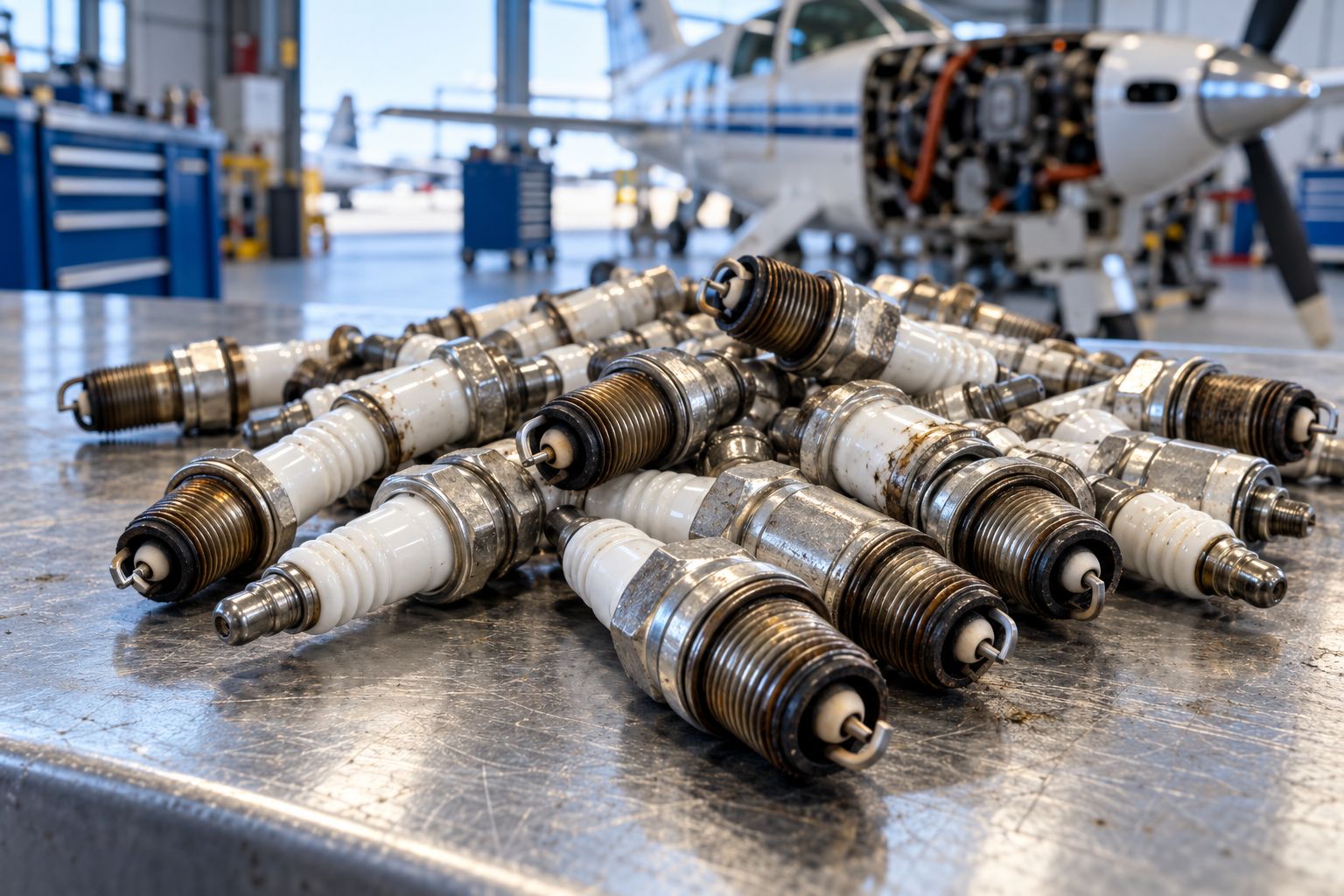
Piston aircraft engines use two spark plugs per cylinder, and the plugs are replaced or overhauled on a regular schedule. Maintenance shops, flight schools and engine overhaul shops often build up boxes of used plugs. Their scrap value depends mostly on the type of electrode inside.
Two main types of aircraft spark plugs
- Massive electrode plugs use thick ground electrodes made of nickel alloy. They are common and robust, and their scrap value is lower.
- Fine-wire plugs use thin electrodes made of platinum or iridium. The precious metal is what makes them more valuable as scrap.
How to tell them apart
Look at the firing end. Massive electrode plugs show two or more wide, flat ground electrodes around the centre electrode. Fine-wire plugs show thin wire electrodes that look like small pins. The part number printed on the plug or on the box also identifies the type, and buyers can check it quickly from a photo.
Turbine igniter plugs and automotive plugs
Turbine engines use igniter plugs instead of spark plugs, and some designs contain precious metal in the electrode or tip. Automotive iridium and platinum spark plugs also contain small amounts of precious metal. They are best kept apart from aircraft plugs, because each group is valued differently.
How to prepare a lot of plugs
- Sort fine-wire plugs from massive electrode plugs.
- Keep igniter plugs and automotive plugs in separate bags or boxes.
- Count the plugs or weigh each group.
- Photograph the firing ends and the part numbers.
A sorted lot is quicker to assess and usually earns a better price than a mixed one, because the buyer does not need to allow for uncertainty.